
On the eve of the Budget presentation, economists on Thursday said the they expect the government to roll back some of the stimulus measures, as the economic growth is on rebound with the Economic Survey projecting the GDP to expand by up to 8.75 per cent in FY'11.

It boils down to whether greater government spending makes up for lower private consumption or whether, through higher interest rates or inflation, it hurts it.

A rate hike will set back the recovery process, but if RBI does raise rates, it will be to prevent the rise in food prices from spilling over to other sectors and to dampen inflationary expectations.
A relatively slow performance by the industrial sector and a high base effect may slow down gross domestic product (GDP) growth in the second quarter (July-September) of fiscal 2007-08 to below 9 per cent, feel analysts.
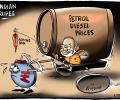
There is no doubt the oil companies are bleeding, but the issue is whether the government should also reduce the extra taxes it gets from high oil prices.

As a percentage contributor to nominal GDP, PFCE's share was 60.1 per cent in FY23, compared with 59.6 per cent and 60.8 per cent in the two preceding fiscal years. "Although PFCE is expected to grow 7.7 per cent in FY23, we believe it is still short of a broad-based recovery. "The current consumption demand is highly skewed in favour of goods and services consumed largely by the households falling in the upper income bracket. "A broad-based consumption recovery, therefore, is still some distance away," said Sunil Kumar Sinha, principal economist with India Ratings.
Eight infrastructure industries have posted a growth rate of 8 per cent for September on account of good performance by crude oil, steel and electricity sectors.

In 2012-13, the Centre managed to cut fiscal deficit to 4.9% of GDP, lower than the Budget revised estimates of 5.2%

Home Minister Rajnath Singh said that the decision could cost the government roughly Rs 15,000 crore.
Retail inflation inches up to 3.77%; IIP growth dips to 3-month low
